How to Store Asparagus: Keep Your Spears Vibrant and Flavorful
Asparagus, with its tender texture and distinct, slightly earthy flavor, is a culinary delight, especially during its peak season in spring. Whether you're planning a quick weeknight side dish, an elegant quiche, or a hearty casserole, the quality of your asparagus can make or break the meal. While available year-round in many grocery stores, ensuring your asparagus remains as vibrant and flavorful as the day you bought it requires more than just tossing it in the fridge. Proper storage is key to preserving its crispness, nutritional value, and exquisite taste. This comprehensive guide will walk you through the best methods for how to store asparagus, ensuring every spear is ready to shine on your plate.
The Foundation of Freshness: Buying the Right Asparagus
The journey to perfectly stored asparagus begins before you even leave the grocery store or farmer's market. Choosing high-quality spears is the crucial first step to maximizing their shelf life and flavor. No storage method, however meticulous, can fully restore vitality to already tired asparagus.
When selecting asparagus, look for these key indicators of freshness:
*
Firm Stalks: The spears should feel firm and sturdy from tip to bottom, not limp or rubbery. Gently bend a spear; it should snap cleanly rather than bend.
*
Closed, Compact Tips: The tips should be tightly closed, compact, and green or purple, indicating youth and freshness. Avoid bundles with splayed, slimy, or flowering tips, as these are signs of age and declining quality.
*
Vibrant Color: Asparagus should display a rich, uniform green color (or purple, depending on the variety), free from any yellowing, graying, or brown spots. The color should be consistent along the entire spear.
*
Moist, Not Wet or Dry Ends: The cut ends of the stalks should appear fresh and moist, but not slimy or moldy. If they look dry or woody, the asparagus has likely been sitting for too long.
*
Absence of Odor: Fresh asparagus has a mild, earthy scent. A strong, sulfurous, or unpleasant odor indicates spoilage.
Ideally, you might find asparagus bundles standing upright in water at the store, mimicking one of the best home storage methods. This is a good sign that the retailer understands the importance of keeping spears hydrated. Prioritize these bundles for the longest lasting freshness.
Immediate Care Upon Arrival: Setting the Stage for Success
Once you've brought your beautiful asparagus home, a few immediate steps can significantly impact its longevity. The most important rule of thumb is:
do not wash your asparagus until you are ready to cook it. Introducing moisture to the spears' surface too early can accelerate spoilage and the growth of mold or bacteria.
Your first decision will be based on how soon you plan to use it. If cooking within a day or two, a simple damp towel method will suffice. For longer storage, the "fresh flowers" technique is highly recommended. Regardless of the method, consider the rubber band that often holds the bundle together. While useful for trimming (as it keeps the spears aligned), it’s best removed for most storage techniques to allow the spears to breathe and absorb water more effectively.
Short-Term Storage: The Damp Wrap Method
If you plan to use your asparagus within 24-48 hours, or if you're short on refrigerator space, this method provides adequate short-term hydration and protection. It's a quick fix that helps prevent the spears from drying out.
Here’s how to do it:
1.
Dampen a Towel: Take a clean paper towel or a thin kitchen towel and wet it thoroughly. Then, wring out most of the water so it's damp but not dripping wet. The goal is to create a humid environment, not a soggy one.
2.
Wrap the Asparagus: Gently wrap the damp towel around the bottom half or two-thirds of the asparagus spears.
3.
Bag and Refrigerate: Place the wrapped asparagus inside a zip-top plastic bag or a reusable produce bag. Don't seal it too tightly; a little air circulation is beneficial. Store this package in the refrigerator's crisper drawer.
4.
Shelf Life: While this method is best for immediate use, it can keep asparagus relatively fresh for up to 3-4 days.
Optimal Storage: The "Fresh Flowers" Technique for Extended Freshness
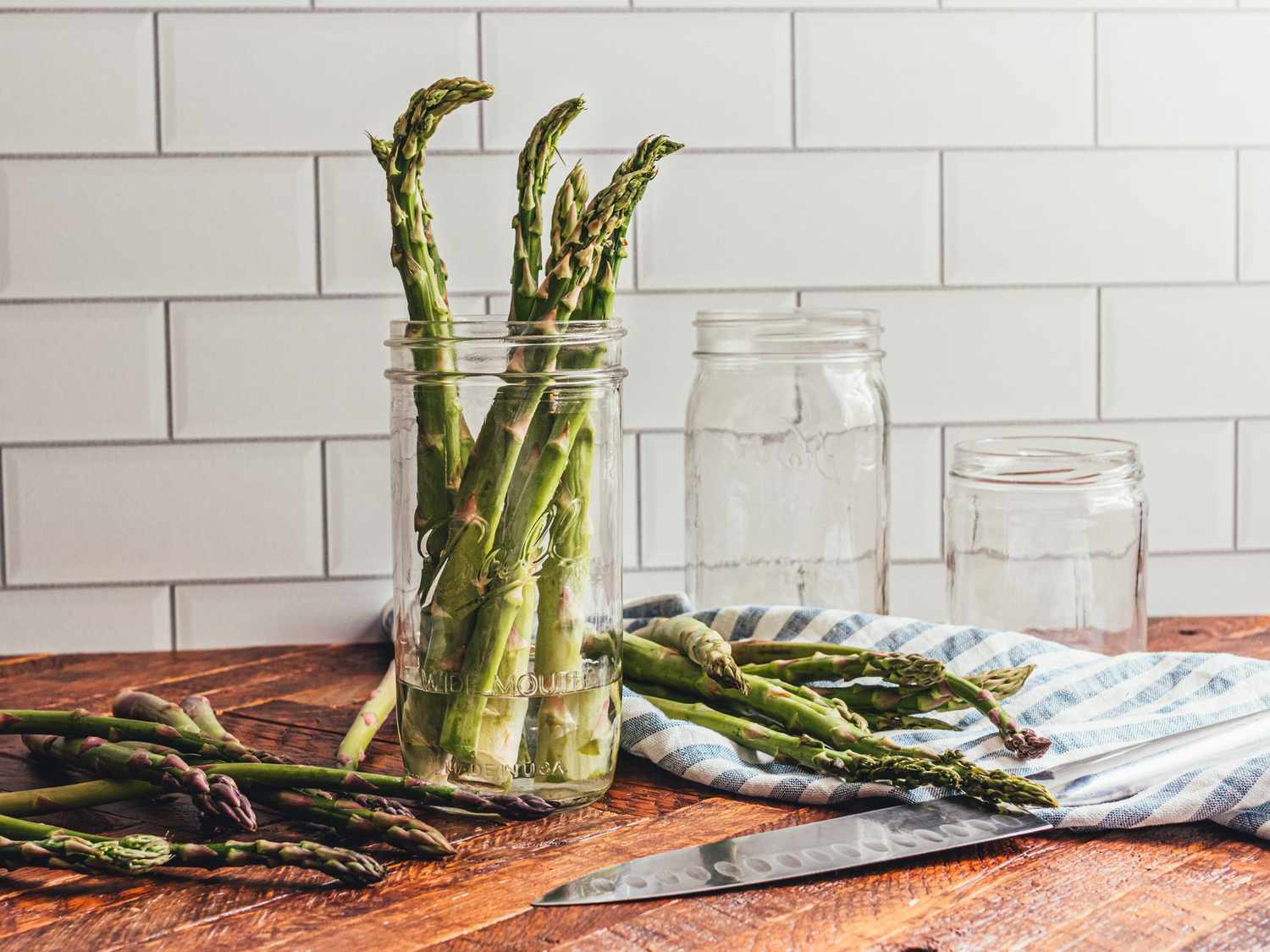
For superior freshness that lasts for several days, treat your asparagus much like you would a bouquet of flowers. This method allows the stalks to continuously absorb moisture, keeping the entire spear, especially the delicate tips, crisp and vibrant. This is by far
The Best Way to Store Asparagus to Keep It Fresh and Crisp.
Follow these steps for the best results:
1.
Trim the Ends: As soon as you get home, take your bundle of asparagus. If the rubber band is still on, keep it for this step to make trimming easier. Using a sharp knife, trim approximately 1 inch off the woody bottom ends of the spears. This exposes fresh tissue, allowing for better water absorption. Discard the trimmed ends.
2.
Prepare the Water Bath: Find a sturdy glass jar, a wide-mouthed glass, or even a small pitcher. Add about 1 inch of fresh, cold water to the bottom.
3.
Stand the Spears: Place the trimmed asparagus spears upright into the jar with the cut ends submerged in the water. You can now remove the rubber band if it’s still on. Ensure the spears fit comfortably without being too tightly packed.
4.
Cover Loosely: To create a humid microclimate and prevent dehydration, loosely cover the top of the standing asparagus with a large plastic bag. A grocery bag works well. Do not seal it tightly; you want some air exchange while retaining moisture.
5.
Refrigerate: Place the entire setup (jar with asparagus and plastic bag) in your refrigerator. The crisper drawer is an ideal spot.
6.
Change the Water: This is a critical step for maximum longevity. Check the water in the jar daily. If it appears cloudy or discolored, pour it out and replenish with fresh, cold water. Clean water prevents bacterial growth, which can hasten spoilage.
7.
Shelf Life: With diligent water changes, this method can keep your asparagus fresh, crisp, and flavorful for 5-7 days, sometimes even longer.
Troubleshooting & Advanced Tips for Asparagus Longevity
To truly master the art of asparagus storage, consider these additional insights and tips that go beyond the basic methods. For even more detailed guidance, check out our article on
Store Asparagus Longer: Essential Tips for Fresh, Crisp Spears.
Reviving Limp Asparagus
Accidentally let your asparagus go a little limp? Don't despair immediately! If the spears aren't slimy or discolored, you might be able to revive them. Trim about an inch off the bottoms, then stand them in a jar of ice-cold water for 30 minutes to an hour. Many times, the spears will perk right up, absorbing the cold water and regaining some of their crispness.
Freezing Asparagus for Long-Term Storage
If you have an abundance of fresh asparagus and won't be able to eat it all within a week, freezing is an excellent option for long-term storage (up to 8-12 months). However, asparagus must be blanched before freezing to preserve its color, flavor, and texture.
1.
Prepare: Wash and trim the asparagus. Cut into desired lengths (e.g., 1-2 inch pieces or leave whole spears).
2.
Blanch: Boil a pot of water. Prepare a bowl of ice water. Drop asparagus into boiling water for 2-4 minutes (shorter for thinner spears, longer for thicker ones).
3.
Chill: Immediately transfer asparagus from boiling water to the ice bath to stop the cooking process. Chill for the same amount of time it was blanched.
4.
Drain and Freeze: Drain thoroughly, pat dry, then spread in a single layer on a baking sheet. Freeze until solid, then transfer to freezer-safe bags or containers, removing as much air as possible.
The Role of Your Crisper Drawer
Your refrigerator's crisper drawer is specifically designed to manage humidity, making it the ideal spot for storing produce. High-humidity settings are perfect for most vegetables, including asparagus, as they help prevent moisture loss. If your fridge has adjustable humidity settings, set the crisper drawer to a higher humidity level for optimal asparagus storage.
Why Not Wash Until Ready?
It bears repeating: washing asparagus before storage is a common mistake. The residual moisture on the spears creates an environment ripe for bacterial growth and mold development, significantly shortening their shelf life. Only wash your asparagus right before you're about to trim and cook it.
When to Say Goodbye: Recognizing Spoiled Asparagus
Even with the best storage practices, asparagus has a limited shelf life. Knowing when it's time to discard your spears is crucial for food safety and enjoyment. Look out for these signs of spoilage:
*
Slimy Texture: The most obvious sign. If the spears feel slick, mushy, or slimy to the touch, they are spoiled.
*
Strong, Unpleasant Odor: Fresh asparagus has a mild, earthy smell. If it emits a pungent, sulfuric, or rotten odor, it's past its prime.
*
Discoloration or Mold: Yellowing, browning, or black spots, especially on the tips, indicate deterioration. Any fuzzy or white mold growth means it must be discarded.
*
Excessive Limpness: While some limpness can be revived, if the spears are excessively rubbery, wilted, and fail to perk up in water, their quality has significantly degraded.
Conclusion
Storing asparagus doesn't have to be a guessing game. By understanding the simple science behind hydration and humidity, you can significantly extend the life and enhance the flavor of this exquisite vegetable. From choosing fresh spears at the market to implementing the "fresh flowers" technique in your fridge, each step plays a vital role in preserving its quality. Embrace these methods for how to store asparagus, and you'll be rewarded with crisp, vibrant, and incredibly flavorful spears, ready to elevate any meal. Say goodbye to limp, lackluster asparagus and hello to culinary perfection every time!